
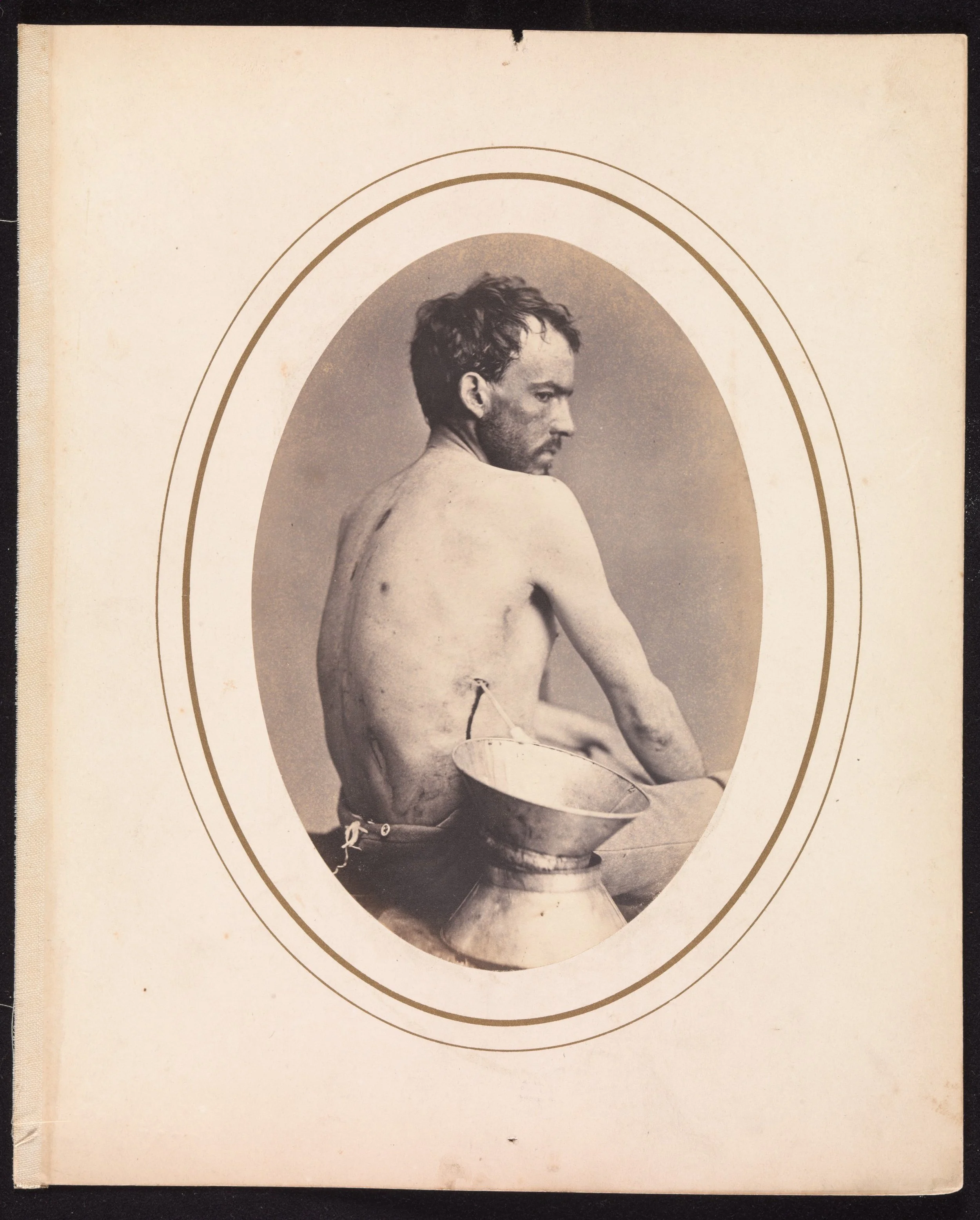
Welcome to Wounds, the Fall 2026 Issue of Metphrastics! We have poems by Aileen Bassis, Gregory Crosby, Anna Hall, David Anson Lee, Vivian McInerny, Kate Millar, Matthew Perry and Amitabh Vikram Dwivedi responding to works in Asian Art, The Costume Institute, Islamic Art, Medieval, and European Painting. Our featured poet is Gregory Crosby, who is interviewed at the end of this issue.
Call for Submissions: For Winter 2027, we have an open call. Poems we’ve received during the Wounds call that were open theme will be put into this pool for consideration. Please submit by December 15th.
Metphrastics is independently funded. If you’d like to make a tax-deductible donation to support our work, please visit Donate.
Note: to comply with copyright law, some artworks are not pictured on this site. Please click the link below the author’s name to view the work.
Stigmata
Anna Hall
Midnight vigils by candlelight
chants and prayers that can’t conceal
the shrieks and wails
of devils bleeding from the fields
The earth cries out in agony
as in the sky the veil is torn
where a star pours out wormwood
into the black water seeping down
Moonlit lightning strikes the scales
from your eyes
undressing the great mystery
opening the bloody tomb
where salvation lies, in the den of
suffering, that pierces your
hands and feet,
the pain of the world,
all hell with you,
you’ve won heaven
by wearing God’s wounds
Anna Hall lives in Alabama where she studies English and philosophy at UNA. She enjoys looking at art and listening to music made by people much more talented than her.
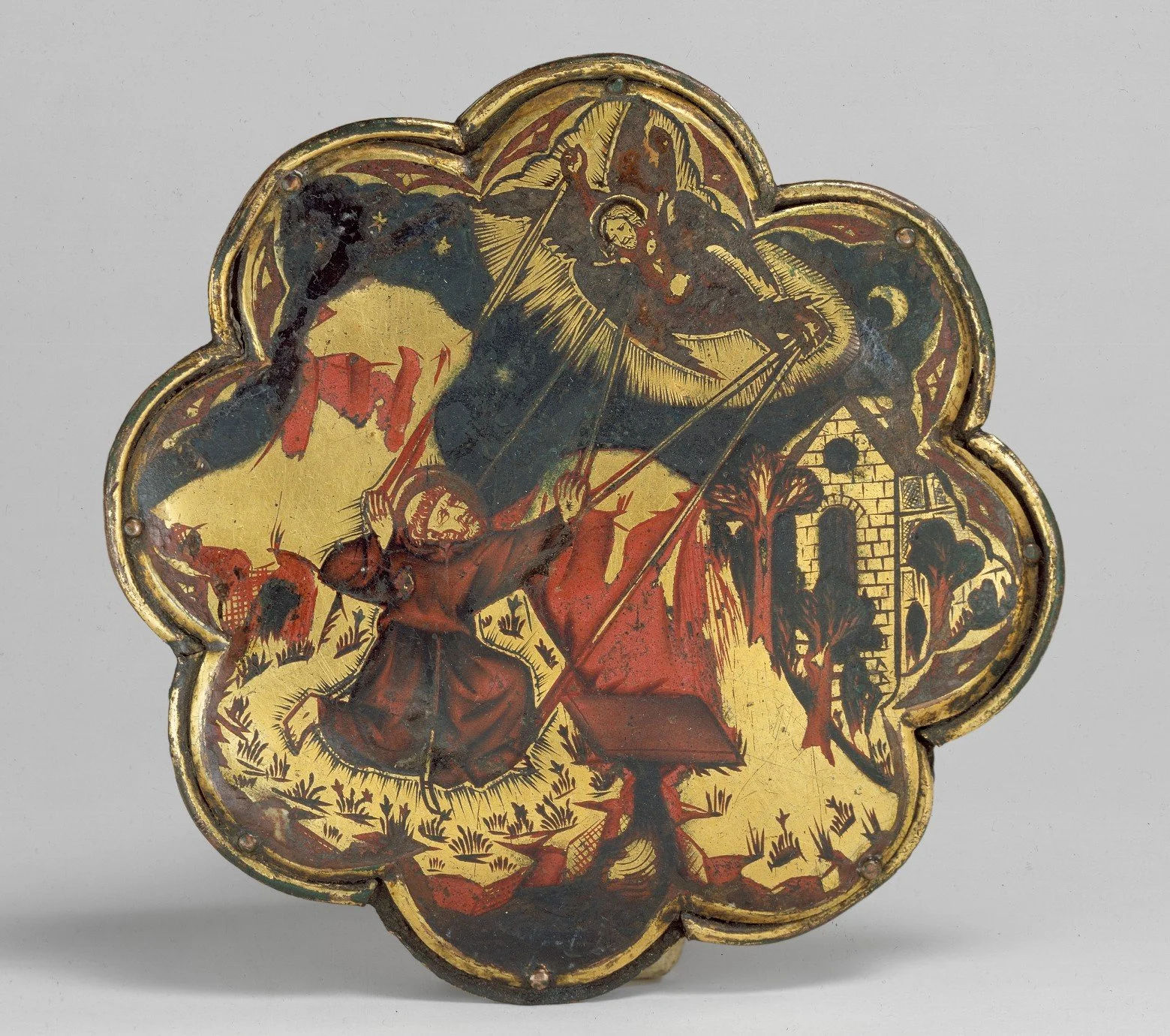
Morse with Saint Francis Receiving the Stigmata
Italian, mid-14th century
Vsevolod Mikhailovich Garshin (1855-1888)
Kate Millar
I cannot see
your wound
(bracing the desk, or
weighed onto it
by something
heavier, black
as a hunch, the down-
ward slant
of all things,
black as
a brother’s empty
bed, the memory
of the opened belly
of the frog,
the knife
in your own hand
obvious as beetroot
juice on metal
even after you tried
to sew it back up)
and that
is your wound
Kate Millar is a poet and educator from Edinburgh. She completed her MFA in Poetry at The New School in New York City. Her poetry can be found in atmospheric quarterly, Cutleaf Journal, Gutter, and elsewhere; her criticism can be found in Cleveland Review of Books, and LA Review of Books. She was shortlisted for the Edwin Morgan Poetry Award and longlisted for the Propel Poetry Prize in 2026.
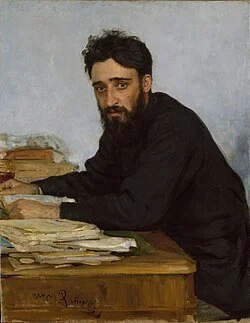
Vsevolod Mikhailovich Garshin (1855-1888)
Illia Repin (Ilia Efimovich Repin) Ukrainian, born Russian Empire, 1884
Firmin
Matthew Perry
No light shone past the oaken dungeon door.
No flames warmed up his room. A blanket of wool
kept some warmth in. The walls had no décor,
only bare stone and mortar. Feet moved to pull
in from around the room the rushes and straw
to build a sort of bed. He made his prayer,
with pious perseverance and quiet awe,
and slept in a cell without a bed or chair.
He woke to torches carried by drunken men.
They spread his arms across the cold tile floor.
He heard the sword pulled by the centurion.
Before the gladius struck, his mind had soared
to fields of cherry, elder, heather, and hawthorn
scents, from the Spanish grounds where he was born.
Matthew Perry is a poet from Prescott, Arizona. His poetry has previously been published in Glassworks, Dirt Freckles, Dread Literary Review, and The Borough.
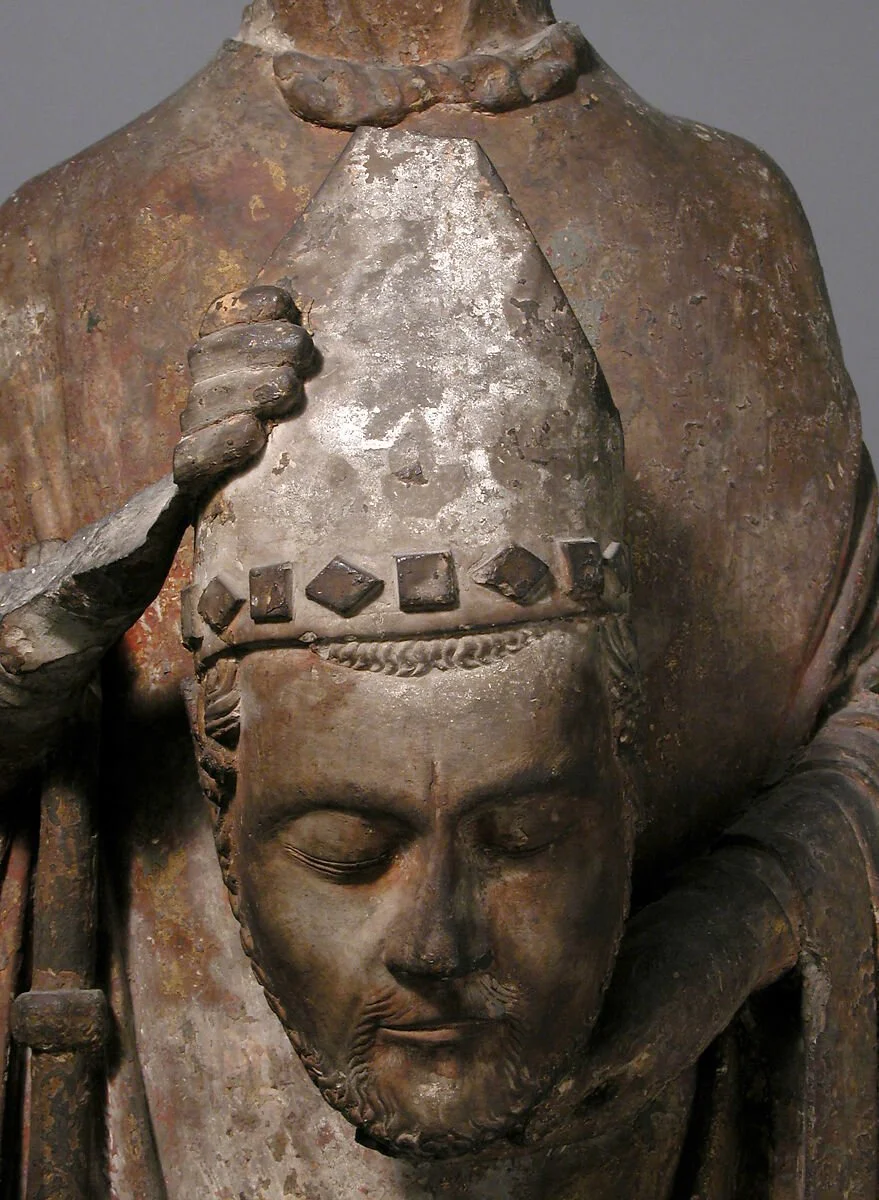
Saint Firmin Holding His Head
French, ca. 1225-75
If I Had My Way
Gregory Crosby
...and she cut your hair. But it’s not so bad.
The jawbone at your feet should be soaked black
with the blood of your enemies, their brains
stuck between its teeth & yet it’s as white
as a bone picked clean by that vulture, Time.
Your head in her lap, her beauty pale
as that bone, shining out like the scissors
that will show you what it’s really like
to be a man. Is it even painful,
that first snip, that slow shearing called love?
After all, hair grows back (unlike eyes,
but that’s outside the frame). She looks serene.
You look content. Can’t we leave it at that?
After the first cut, a thousand long nights,
stubbled head bowed, that great forest of stumps,
her hand, caressing... it was worth it
(was it worth it?), even now, as you hear
a voice out of a cloud, a preacher’s voice,
down from centuries of streets, from Harlem,
blind as you will be, strong as you once were,
singing through the dark: If I had my way,
if I had my way, if I had my way...
I would tear this whole building down.
Gregory Crosby is in Brooklyn, listening to the wind.
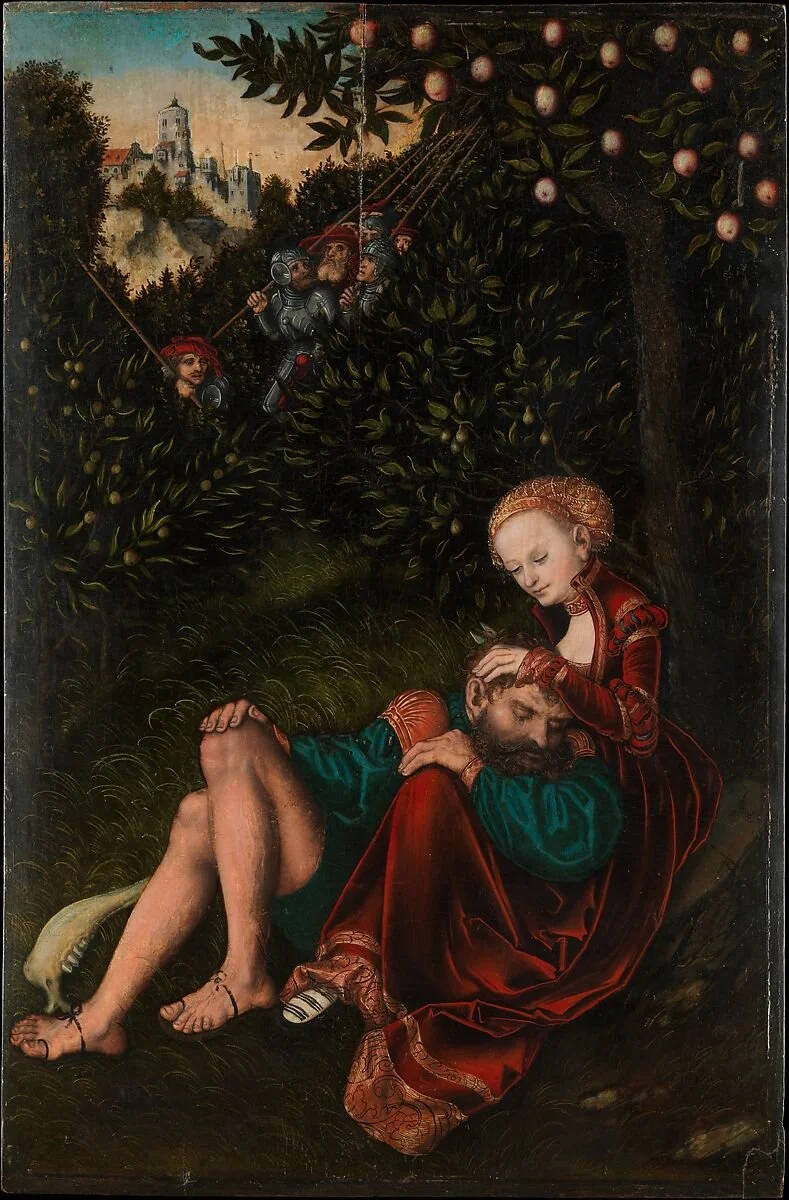
Samson and Delilah
Lucas Cranach the Elder, German, ca. 1528-30
The Rim Remembers the Hand
David Anson Lee
No one knows what broke you.
A careless hand.
The edge of a table.
Gravity doing
what gravity does.
Then someone found
the pieces.
Not gold.
Silver lacquer
along the broken rim—
a thin weather
where the wound begins
to catch light.
Imagine drinking
from the place
where you were broken.
Imagine turning
the cup toward your mouth
and feeling, against the lip,
the raised history
of another person’s care.
People call this beauty.
I don’t think
the cup is asking that.
It does not say:
Look how lovely
my damage has become.
It says:
Someone noticed
what could have been thrown away.
Someone gathered
the pieces.
Someone sat long enough
to join them.
And now the fracture
is the first thing
the light finds.
At the museum
I lean closer.
The cup remains silent.
Still, when I leave,
I carry my hands
as if they have been entrusted
with something breakable.
David Anson Lee is a physician and poet whose work explores memory, mortality, science, art, and the unexpected connections between the intimate and the historical. His first poetry chapbook, The Body Keeps Its Inventory in Shadow, is forthcoming from Kelsay Books. His poems have appeared or are forthcoming in literary journals and magazines in the United States and internationally.
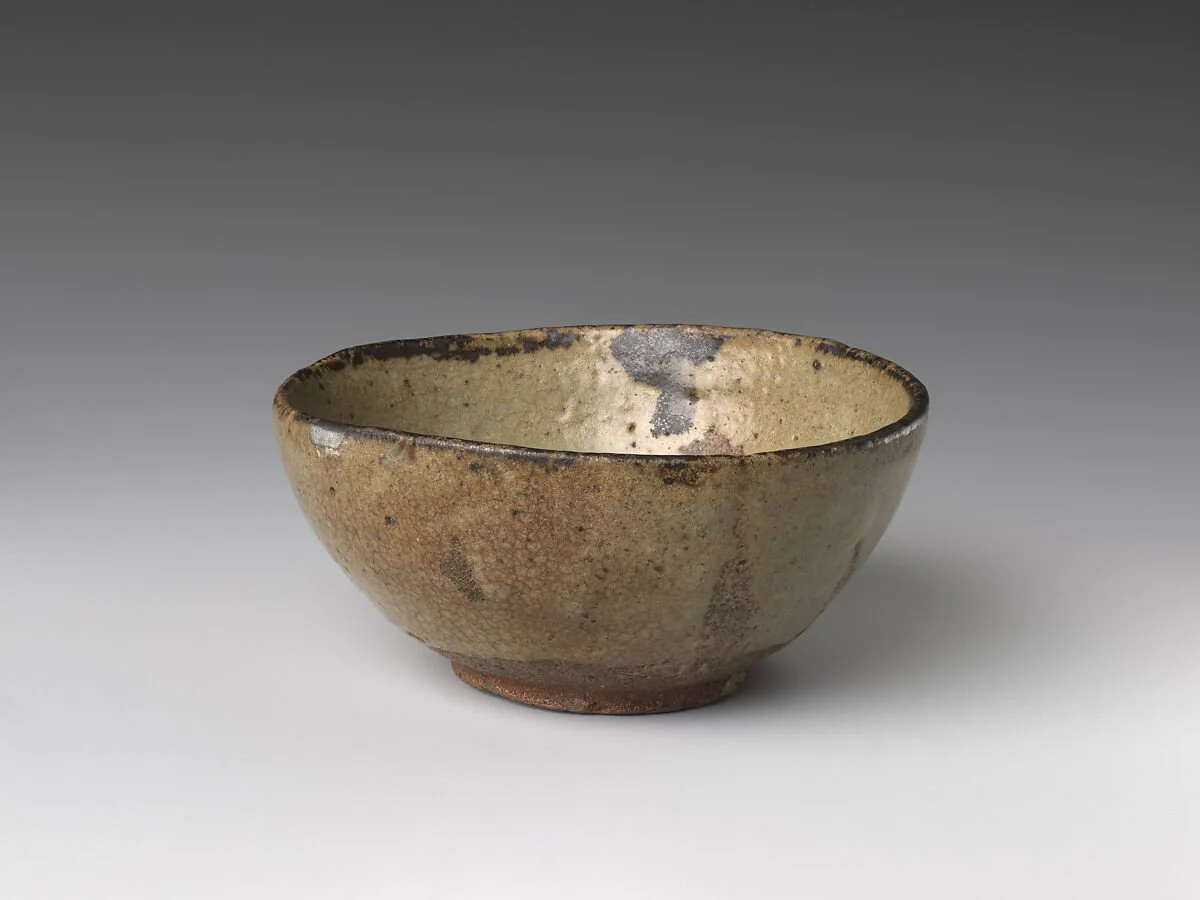
Sake Cup (Guinomi)
Japan, early 17th century
Attacked by Night
Aileen Bassis
They tell the story
over
and again,
the battle: the lance,
the bow,
daggers and spears,
the wrestling tangle
of arms,
the moment
when the sword sliced
one man’s back,
the crumpled fallen.
We’ve heard this
all before.
Victors and victims,
the warlords gather now,
drones buzzing
or whirring or making a noise
that can’t be heard by human ears
above tree cover and bogs,
crushed cities, broken buildings,
and rivers filled with refuse.
Lost arms, lost legs.
Negligible damage.
A bomb wanders off-target
— civilians died,
an official said “things happen.”
In the ancient battle scene
the hero is center, unscathed,
his white turban is clean
and the calm-faced dead rest
with red streaks along their cheeks
graceful as flower stems.
Only the wide-eyed horse seems to see it all,
mouth agape, holding a bridle between
his chattering teeth.
Aileen Bassis is a NYC poet and visual artist. She’s the author of a collection Among Sinners and Saints, and two chapbooks, The Other Side of the Mirror and Advice for Travelers and other poems. Her poetry has received support from the Yaddo Foundation, the Atlantic Center for the Arts, NYState Council on the Arts and the Queens Arts Fund.
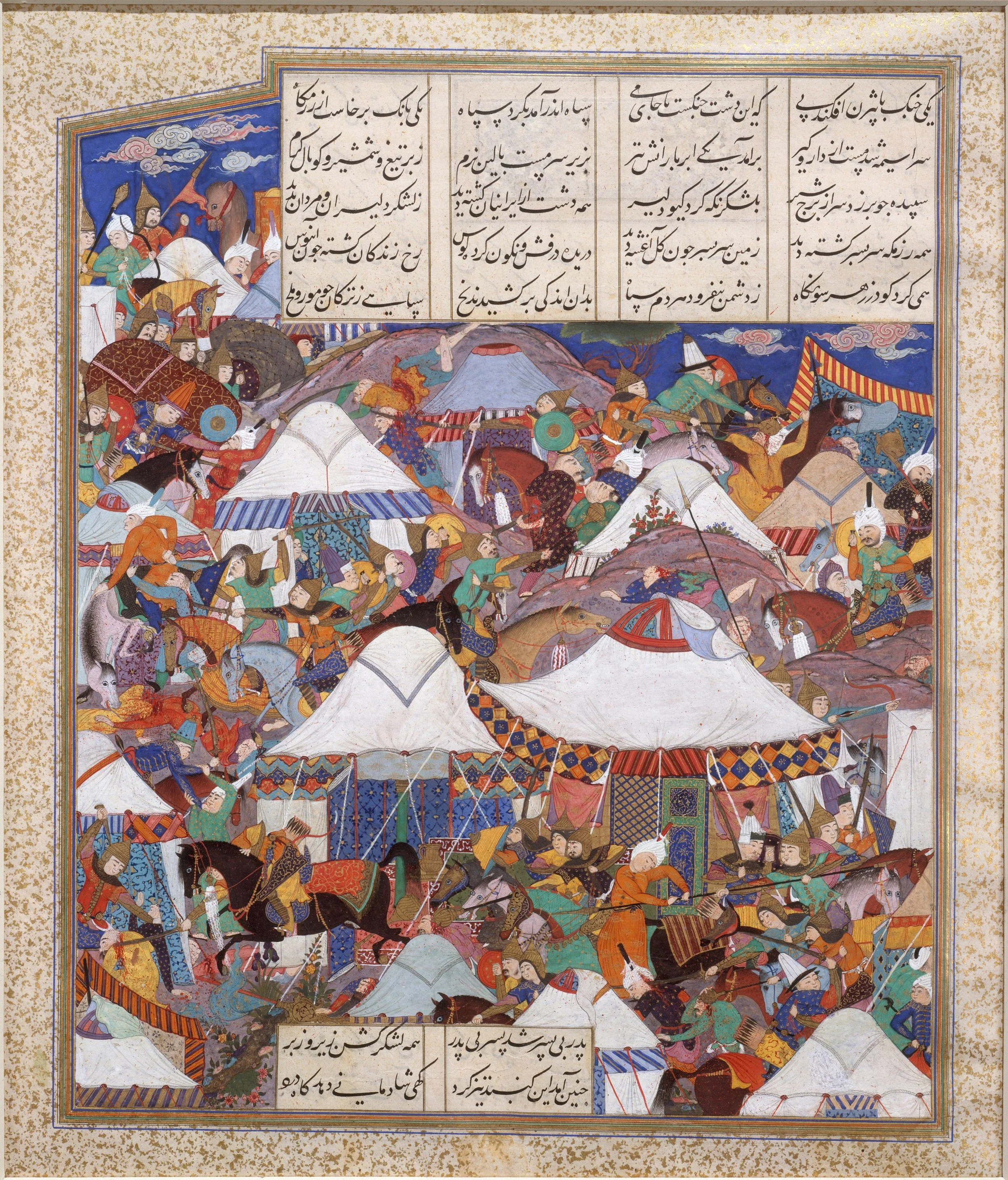
The Besotted Iranian Camp Attacked by Night
from the Shahnama (Book of Kings) of Shah Tahmasp,
attributed to Qadimi (active 1525-65)
Time Wounds and Other Indignities
Vivian McInerny
after Corset Anatomia by Renata Buzzo
She despaired of the master plan,
unwritten, yet rock rigid,
that would
trap her inside a slowly decaying carcass
Life sentenced
able only to bear witness and
occasionally weep.
She woke Sunday to discover her heart,
exposed and pumping in her open chest.
The in-and-out of her bellow lungs wholly visible
Intestinal twists, organs, pink and plump,
an inconvenience immediately evident
Her dance partner dabbing
with a pocket handkerchief at her oozing self.
Skinlessness was messy
Life, raw and nerve-jangling,
A tooth root ache,
The twinging pain from a cornered elbow
Brevity is its beauty.
Vivian McInerny writes fiction, essays, and poetry. She's a former fashion journalist who regularly reported from the runways of New York, where wispy models, stylish spectacles, and imaginative concoctions of fabric never failed to inspire stories -- and an existential crisis. She's working on a memoir about backpacking the Silk Road to India at age eighteen.
What the Cup Refused to Forget
Amitabh Vikram Dwivedi
The hand that dropped you is gone.
So is the floor.
Only the evidence remains:
a bright vein crossing the red clay,
gold entering wherever the world
once entered too quickly.
Someone could have hidden it.
Ground the edges, matched the glaze,
made accident impersonate innocence.
Instead, they taught the crack
to catch light.
Imagine being repaired
without being asked to forget.
Hot water comes again.
Tea darkens the hollow.
Two hands lift you
as carefully as before, perhaps more carefully,
though care is not the same as fear.
Your mouth is still uneven.
Your body still remembers fire.
Where you opened, gold has learned
the exact grammar of the opening.
There are wounds that close.
There are wounds that become
the place a thing begins
to shine.
Amitabh Vikram Dwivedi is an associate professor in the School of Languages & Literature at Shri Mata Vaishno Devi University, India.
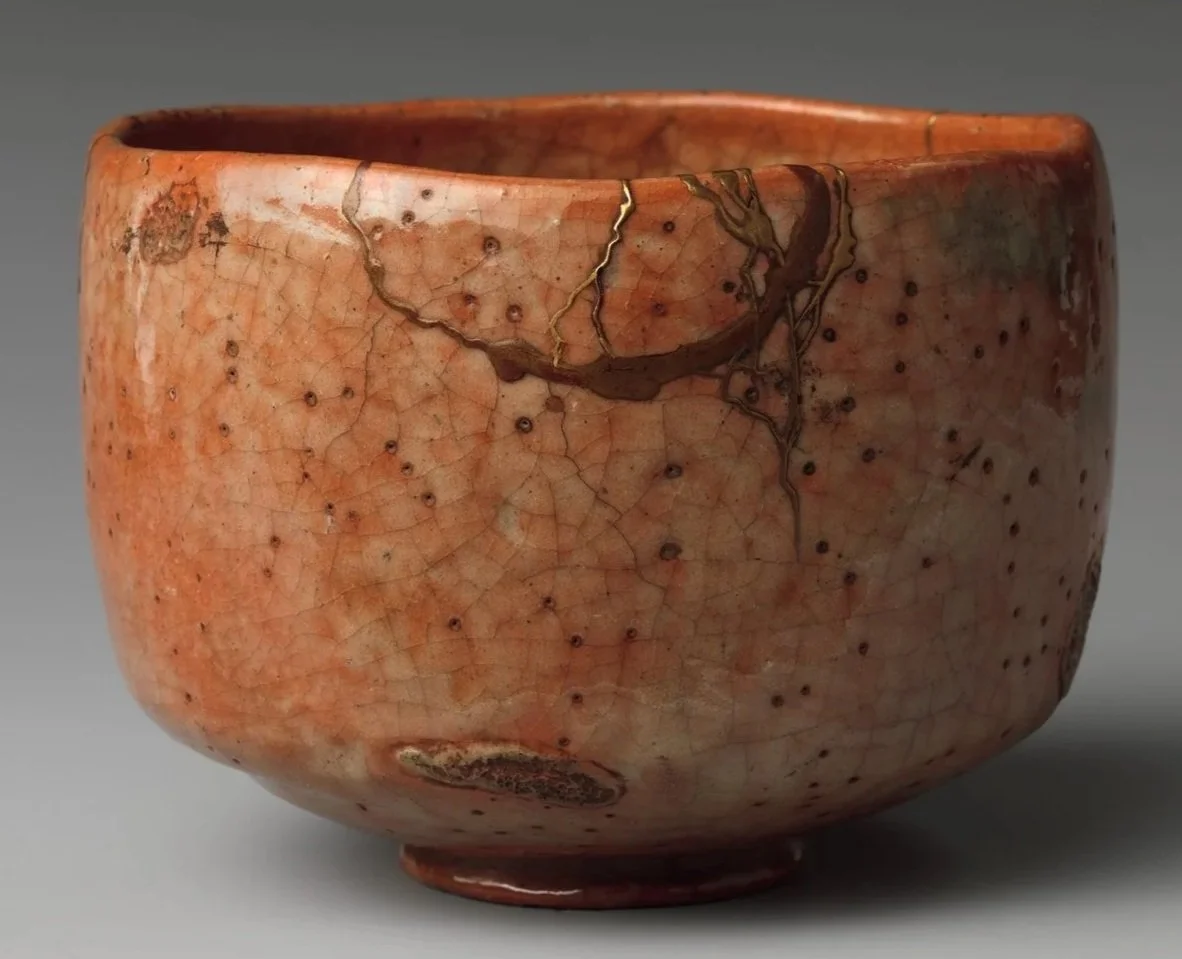
Red Raku Tea Bowl (Chawan)
Style of Hon'ami Kōetsu Japanese, 18th century
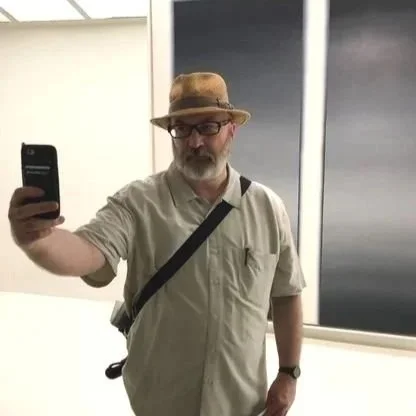
AN INTERVIEW WITH GREGORY CROSBY
Describe your ekphrastic process. Do you have a favorite prompt or way in?
Years ago, a friend commissioned a poem from me; he was an Episcopalian, and it was for some sort of ekphrastic art project his church was putting together. I wrote a poem called “On Caravaggio’s The Calling of St. Matthew,” which was an interesting choice, as the painting hangs in the chapel of a church in Rome, which I’ve never set foot in, neither the church nor Rome. I based my poem entirely on my experience of a reproduction of the painting, and on my mild obsession with Caravaggio (who remains my favorite pre-Modern painter). Later I wondered what it meant to write an ekphrastic poem about a work of art that I only knew second-hand; I wondered if I shouldn’t have titled the poem, “On a Color Reproduction of Caravaggio’s The Calling of St. Matthew I Saw in a Heavy-Ass Art Book.” Does it matter to the poem? Does the poem depend upon the aura of the original? If you saw a black and white photo of that archaic torso of Apollo, would you still be compelled to change your life? Or would that simply become a different poem? Like anything else that sparks a poem, context is king. You can’t know what might come to you, after you’ve turned the corner of a gallery or turned the page of an art book, or clicked on a thumbnail to enlarge it. Which is to say the process is always different, always unexpected.
What attracts you to a work for ekphrasis? How do you know you’ve got a good subject?
You know you’ve got a good subject when it’s no longer a matter of You’ve got to change your life but Your life just changed.
What’s your favorite room at the Met?
The Frank Lloyd Wright Room.
Do you have a favorite ekphrastic poem?
Elizabeth Bishop’s “Keaton.”
What advice would you give a writer who would like to try ekphrastic poetry?
Find a work, in any medium, that you absolutely love, but an obscure work, by an obscure artist, one who perhaps you’d never even heard of until you encountered their work... and then write a poem about it as if it were as famous as “Starry Night.”
What excites you about the Metphrastics project?
It’s an excellent excuse to spend a day at the Met. Not that one needs an excuse.