
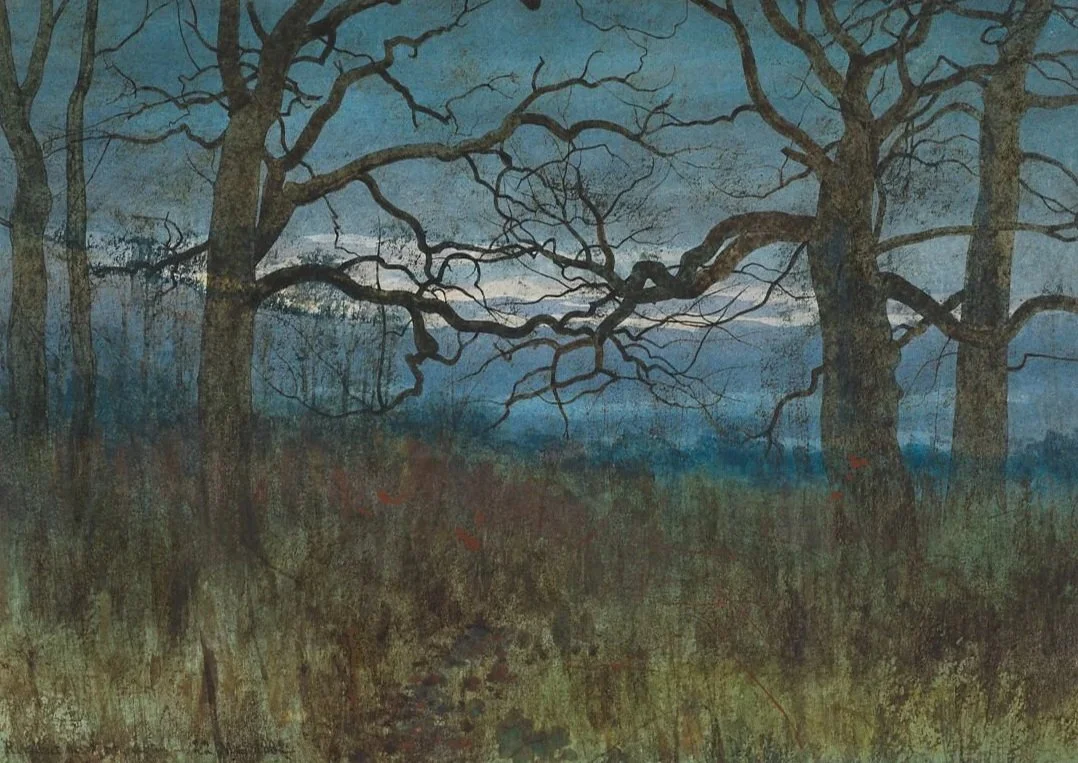
Welcome to the Winter 2026 Issue of Metphrastics. We have poems by A.C. Cambers, Katherine Flannery Dering, Marjan Khoshbazan, Arden Levine, Howard Osborne, Shae, and Kevin Varrone responding to works by Lee Doo Shik, Claude Monet, Man Ray, George Morrison, and art from Ancient Egypt, Decorative Arts and the Cloisters. Our featured poet is Elizabeth T. Gray, Jr., who is interviewed at the end of this issue. Thank you to all who submitted!
Call for Submissions: We’re shaking things up for Spring and will devote an entire issue to a single painting! “Pandora” by Odilon Redon offers myriad ekphrastic opportunities, including demons, the Pandora myth, its relationship to World War I, and of course the rich and provocative imagery. Large and full of vibrant color, it’s best viewed in person, so if you’re able to get to the Met, do go meet her. Submit your Pandora poems by March 15!
Metphrastics is independently funded. If you would like to make a tax-deductible donation to support our work, please visit Donate.
Note: to comply with copyright law, some artworks are not pictured on this site. Please click the link below the author’s name to view the work.
Tingles
Marjan Khoshbazan
It tingles.
And then, in a few seconds,
the bruises take root
under the skin.
The sun, with its fist,
strikes the belly of the sky.
The water, unconsciously,
feels the pain.
A few drops of night
have poisoned and weakened nature.
She is a poet whose work explores silence, memory, and the fragile boundary between presence and absence.
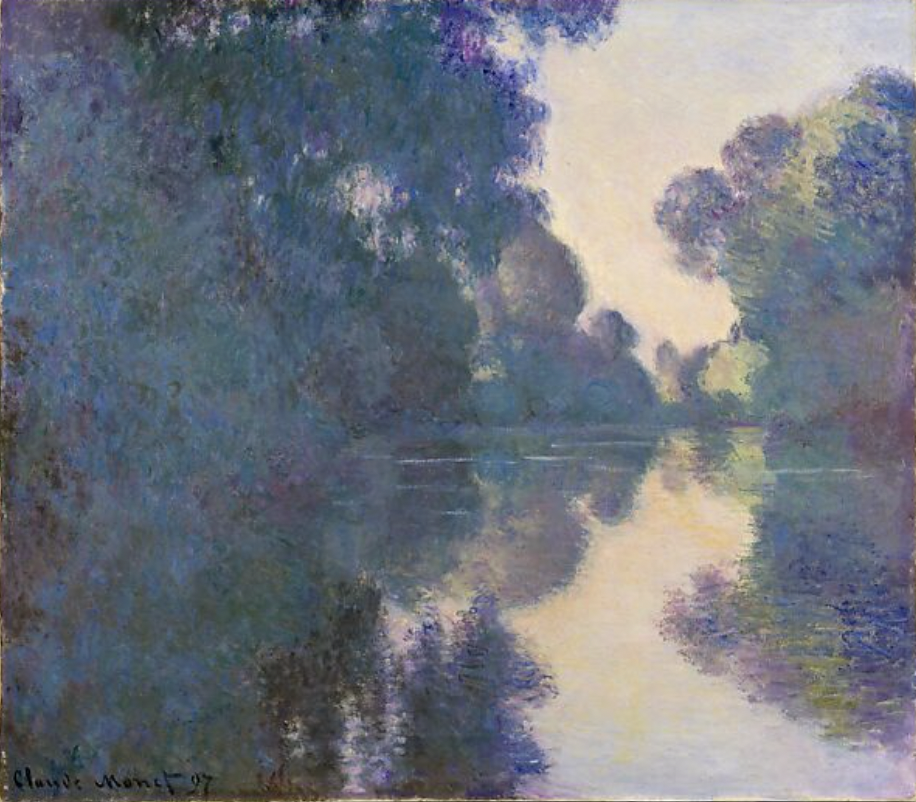
Morning on the Seine near Giverny
Claude Monet, French, 1897
WHITE EYE
Kevin Varrone
after White Painting, by George Morrison
I have been inside fog,
late in the afternoons,
seen in its scumble
the afterimage of moon
& stars through the salt creep
on the old window
in my camp on the foreshore––
I have stared at fog alone, stared so long into it
I’ve seen the promise of the other side,
seen shivs of banished sun
& sky bleed through the seams
just before the heavy application of weather cleared,
but the weather never cleared
beyond slight inflammations of opacity;
it doubled down & sought out the half-spaces
between the lines of the old sash
& passed through the wavy glass
& wound around me like a strip of silk
Kevin Varrone is the author of three books of poetry, most recently Box Score: An Autobiography, as well as numerous chapbooks. His poems have appeared in various literary magazines and journals, including the Academy of American Poets poem-a-day anthology. He lives outside Philadelphia and teaches at Temple University.
Hand Clapper, Middle Kingdom, Egypt
A.C. Cambers
Make me forget
the pain of living. Fire swells
inside me, smoke climbing—
a life alight.
Cold limestone, blinding,
a tomb calls me.
I don’t want to go.
This life with you is mine.
Hold me close,
pull me inside
your dreams.
Anubis lures me
to a new life. Pockets
of magic explode
inside me. Grieving fingers
abandon me, buried
beneath painted moments.
Carved hands clacking,
their haunting replacing
yours in mine.
A.C. Cambers is a member of NYU's Veterans Writing Workshop. Her poetry has appeared in Yearling, Eunoia Review, Same Faces Collective, Last Leaves, and Defenestration. Connect with her at happyprettysweet.substack.com.
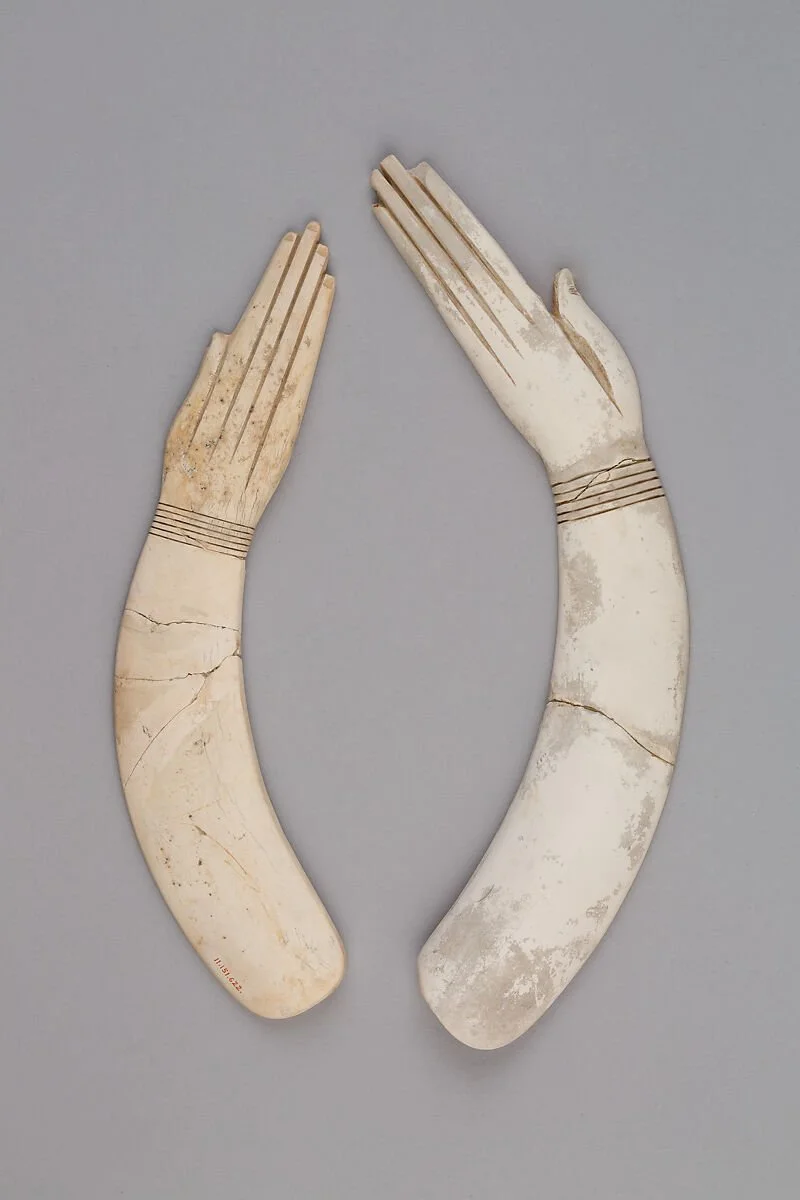
Clapper
Middle Kingdom
ca. 1850–1750 B.C.
Colour Regurgitated
Howard Osborne
after Untitled by Lee Doo Shik
No longer satisfied with mere monochrome
It decided to start with colour all over again
And here, a location was so easy to choose
Perhaps in greater volumes than anticipated
In one big amount, colour was regurgitated
Dripping, spitting, reds alongside some blues
Future choices, a big challenge for any brain
Out onto a green palette to find a new home
From its mouth, like a bag’s torn off corner
It spewed and gagged, colours still emerging
Now reluctant to admit that it was confused
Acrylics and oils each have a distinctive taste
Watercolours or gouache are cheap to waste
But substance is not yet style, yet to be used
Yet more coming out, and it was still surging
But it showed respect, like any hired mourner
Howard has written poetry and short stories, also a novel and several scripts. With poems published online and in print, he is a published author of a non-fiction reference book and several scientific papers many years ago. He is a UK citizen, retired, with interests in writing, music and travel.
Six-light candelabrum
(meat prayer)
Shae
last warm taper in the gallery of obedience.
bronze spine, candle-throat,
its wax remembers touch—
good girl, wax girl,
flesh under warranty.
sometimes the fire remembers her—
kneeling light, fever hymn.
for three minutes, god is combustion.
then: smoke, stillness, apology.
faces reflected in gilt.
saints without names,
their patience carved in metal.
the bread becomes doctrine,
the doctrine hunger.
a supervisor (neutral, fleshlike)
asks how she’s holding up.
like the six-light candelabrum, she says—
wax-throated, candle-eyed,
each flame a small confession.
one gutters. one refuses.
the rest perform obedience.
he notes it down.
bless the wick. bless the wax.
bless the girl who flickers.
Shae is a queer, autistic goblin interested in the intersection of disability justice and design, collecting tiny trinkets and having an unwavering devotion to Shrek as both art and ideology. Free Palestine!
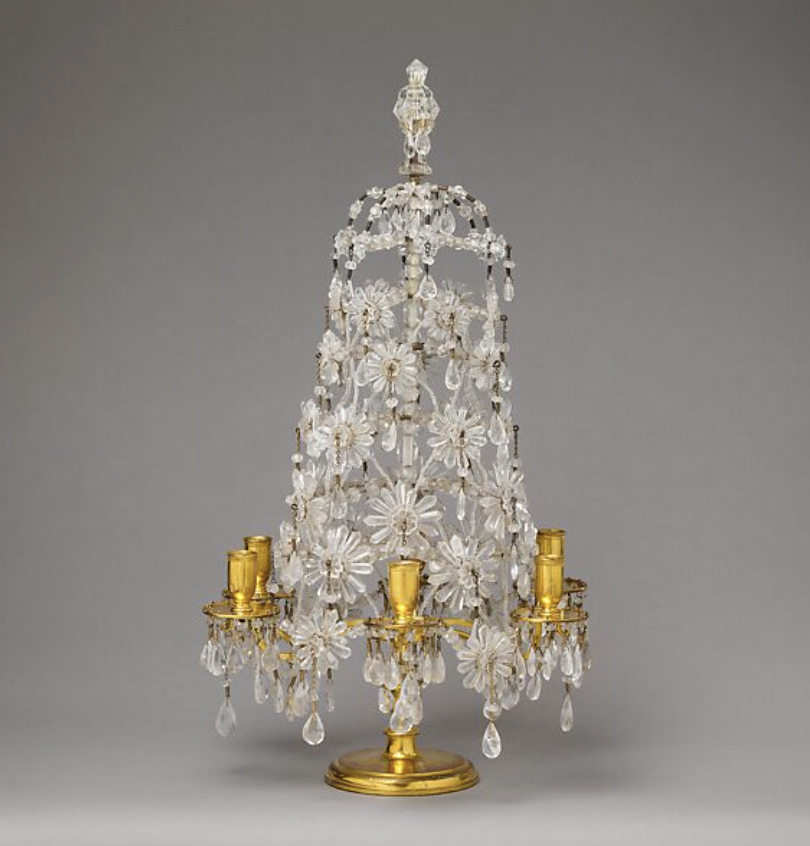
Six-light candelabrum (girandole) (one of a pair)
possibly Swedish, 18th century style
Cloisters in Winter
Katherine Flannery Dering
Horizontal slant of afternoon sun.
Brown palisades, silver river.
White blanket over the herb beds.
My list of treasures I cannot save—
growing. I would happily
spend days dismantling them
from their ruined foundations,
wrap them in felt and bubble wrap,
suspend them from slings
to absorb the shock of transport.
I blast at rock and build foundations
restore, reassemble,
reconstruct, conserve,
hoping they are not already gone.
Katherine Flannery Dering is a long-time patron of the Met and especially enjoys visiting the Cloisters. She is the author of a memoir and a poetry chapbook. A former Spanish teacher and banker, she holds an MFA in Creative Writing from Manhattanville University.
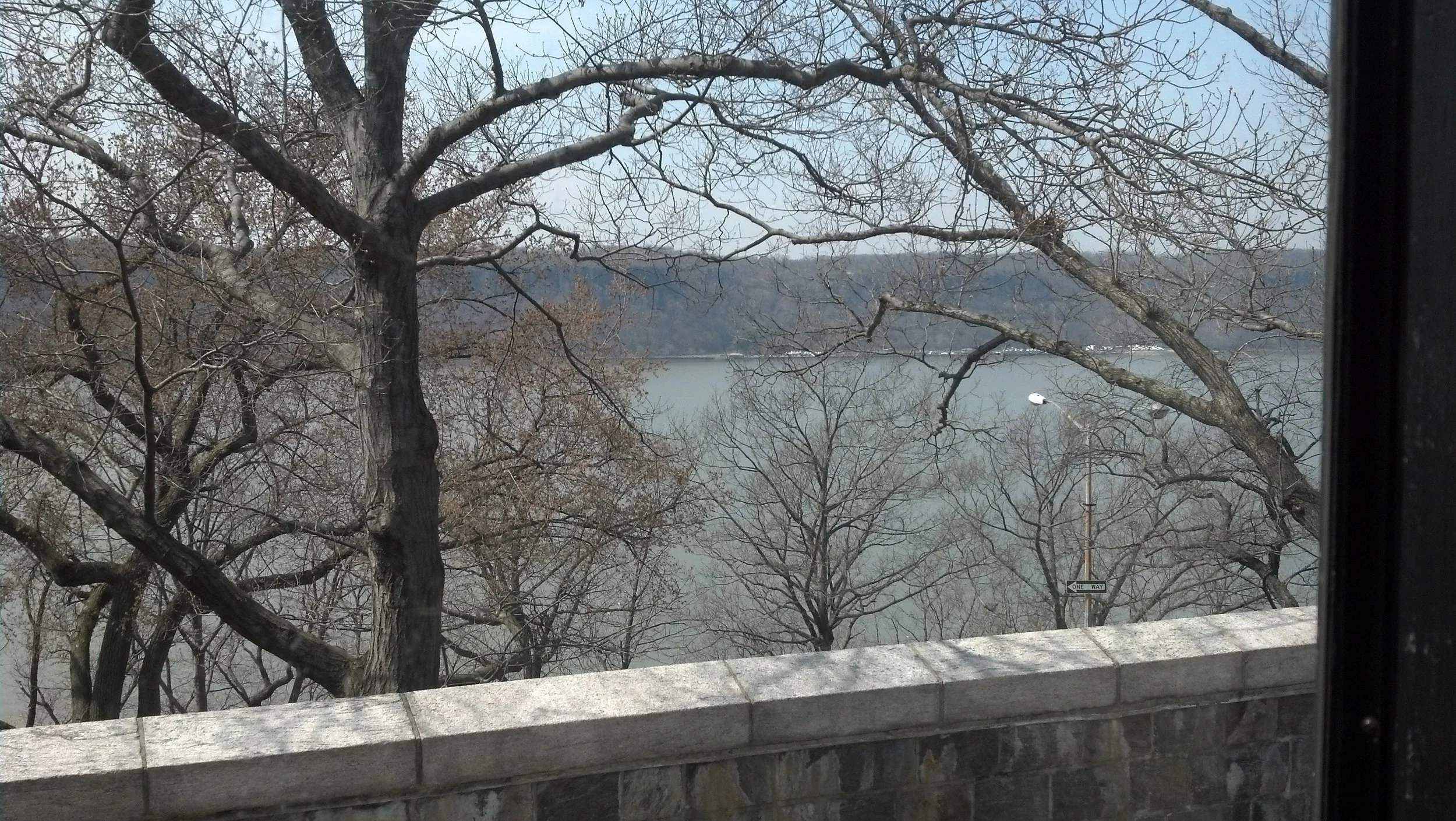
Photo by Katherine Flannery Derring
Novice / Subject
Arden Levine
She still can’t believe she’s let boys
look at her naked. Even fully clothed,
this wax paper skin can’t
withstand the puncture
of a glance. A stranger’s imagined touch becomes
pure perversion. And if one sees you
(whether by chance or permission)
where underwear should be covering: well, then
he retains the rights to that image.
Shouldn’t she know / better than this?
In the gallery, when a boy looks,
he is in conspiracy
with the walls. If she thinks about the last time
the distance collapsed between his ribs
and hers, all of the eyes
in all of these photographs will alight on a point
somewhere above her thighs, below her throat.
Arden Levine’s poems have appeared in AGNI, Barrow Street, Harvard Review, and elsewhere. Her forthcoming collection, Spoke (finalist for the 2024 National Poetry Series), will be published in 2026 as part of The Word Works’ Hilary Tham Capital Collection. Arden is a municipal public servant working/living in/for New York City.

Électricité
Man Ray American, 1931

AN INTERVIEW WITH ELIZEBETH T. GRAY, JR.
Elizabeth T. Gray Jr. is a poet, translator, critic, and corporate consultant. Recent poetry collections include After the Operation (Four Way Books) and Salient (New Directions). She lives in New York City and raised her identical twin sons at the Met.
Describe your process writing ekphrastic poetry. Do you have a favorite prompt or way in?
I’m not sure I have a process, or a prompt, or a way in. Until I saw the prompt about the Met’s Hall of Arms and Armor, I hadn’t explicitly thought about writing an ekphrastic poem in years. And, while there is a sword at the center of the poem, and a girlfriend as an addressee, it’s really a poem for and about my son, and conjures those magical multi-dimensional locations in space-time that we come across and inhabit—all too briefly—with a child. If we’re lucky.
What attracts you to a work of art for ekphrasis? How do you know you have a good subject?
A piece of art simply seizes me—it must be dealt with in some way. It doesn’t happen often, this seizure. Usually, I wander by and take in artworks, always on the hunt for something that might cast a light on something I might write, or have written, or been thinking about.
You raised your children going to the Met. How did watching them interact with the pieces affect your relationship to the art?
My identical twin boys and I spent many rainy (and some non-rainy) days at the Met when they were growing up here in the city. Usually there were two of us adults, one for each twin. The mission was always the same: Find something amazing and meet back here in 45 minutes. Then we’d spend the rest of the time sharing these new discoveries, and sometimes we would sit down and draw each of them in our small artist notebooks.
Initially they wanted a more specific assignment: “What are we supposed to be looking for?” Then realized the assignment was wide-open permission to look at anything and everything. (And of course, at the Met, pretty much every single thing is amazing, so it’s a pretty easy assignment…)
I have also become less programmatic in encountering art. Instead of “I need to understand X and the development and masterworks of X” I now build in some random permissions: “Find something amazing, Liz. Use only your eyes.”
Now the boys are 30, and each of them spends time in art museums, any kind of art museum. Two years ago my son Sam and I were both in Paris, and he asked me to go with him on his first trip to the Louvre. He needed to see the Mona Lisa and Delacroix’s Liberty Leading the People. Once those were ticked off his list, he just took off across Greece, Rome, and the art of Northern Europe, not quite at a run. For a moment I wondered how he could be so cavalier in the presence of such momentous art, and then realized that he was quite happily at home in an environment that had always felt like a playspace full of permissions. It was such a joy to watch him.
And of course my son William, when he brought his girlfriend to see his Met, made sure thatArms and Armor was their first stop. The photos arrived on my phone immediately.
Do you have a favorite piece of art at the Met?
I do! This 10 th century CE bowl from Nishapur, in what is now northeastern Iran. The calligraphy and the form and material of the bowl seem so perfectly balanced. I am drawn to art like this bowl: spare, colors muted and sparse, text and object integrated in some way.
Years ago, before they renovated the Islamic Galleries, this bowl sat quietly in a corner, and I decided that—given how unobtrusive it was—it was probably not on many people’s “when the Revolution comes what object are you immediately going to steal from the Met” list. When they renovated the galleries, there it was, smack in the center of the main entry into the galleries, beautifully lit. So I will need to be quick to snatch it.
Do you have a favorite ekphrastic poem?
Perhaps the description of Achilles’s shield in Book XVIII of The Iliad, if that qualifies. And Auden’s response to it, although of course neither poem was written from an encounter with the shield itself. I also think John Ashbery’s Self-Portrait in a Convex Mirror is a masterpiece. It changed how I saw poetry and his work, and changed my own.
As attested by my lust for that bowl from Nishapur, I’m always drawn to interactions between image and text. I’ve spent a fair amount of time looking at Islamic calligraphy and illuminated/illustrated manuscripts, and am always entranced with Zen ink drawings and the poems around or near them done with brush and (the illusion of) haste. Those Song Dynasty scrolls! The text and the image consist of a single piece of art, but they interact.
What excites you about the Metphrastics project?
It’s extremely engaging, asking us word-smiths to not just pass by but to have a conversation with a piece of art. The mission is a compliment to my favorite of the world’s great museums, and the portfolios of poems are a complement to its collections. I am so grateful for it all.